Homeownership has become more challenging across the country, especially for the people our communities count on every day. Teachers, healthcare professionals, first responders, police officers and law enforcement, military members, and veterans are all navigating the same pressures as other buyers: higher home prices, mortgage rates, insurance costs, taxes, and limited housing inventory.
But the full story reveals encouraging news, too.
New Homes for Heroes research shows that homeownership is still within reach for many Hero households, especially in certain Midwest and Great Lakes metro areas where home prices remain more closely aligned with stable Hero incomes.
The Homes for Heroes report looks at housing affordability across the nation’s 50 largest metro areas for teachers, nurses, healthcare workers, firefighters, EMS professionals, law enforcement personnel, military members, and veterans. The report highlights where heroes are best positioned to buy, where affordability gaps are widest, and how age, income, location, and household structure can shape buying power.
If you’re wondering what affordable housing for essential workers looks like today, the report is a helpful place to start.
Why Home Affordability Matters for Essential Workers
Essential workers keep communities moving. Teachers educate the next generation. Healthcare professionals and nurses care for families. Firefighters, EMS professionals, and law enforcement personnel respond when people need help most. Military members and veterans serve the country and continue strengthening communities long after their service.
So when the people who serve a community struggle to afford a home in that same community, it matters.
Affordability affects more than a monthly mortgage payment. It impacts commute times, family routines, workforce stability, stable housing, local schools, emergency response, hospital staffing, and the ability for heroes and their families to build long-term roots where they work and serve.
The Homes for Heroes affordability report shows both sides of today’s housing market. Many established Hero households remain well positioned to buy in several major metros. At the same time, younger heroes, single-income buyers, and those living in high-cost coastal housing markets face a more difficult path.
That balance is important. The challenge is real, but so is the opportunity.
What the Homes for Heroes Affordability Report Found
The report compares Hero household incomes with the area median income and the income needed to afford the median-priced home in each metro area. The analysis factors in home prices, mortgage rates, property taxes, homeowners insurance, and a 3% down payment.
The findings show that many established Hero households remain better positioned than the average American household to afford a home in major metros.
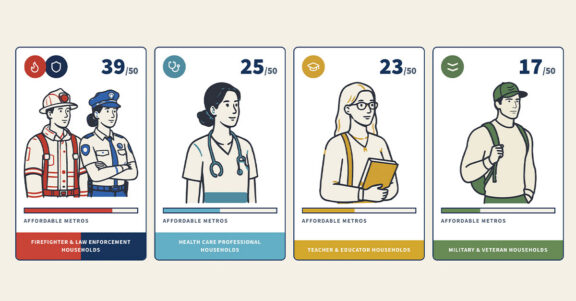
According to the report, Firefighter and Law Enforcement households can afford the median-priced home in 39 of the 50 largest U.S. metro areas. Healthcare professional households can afford homes in 25 of 50 metros, Teacher and Educator households in 23 of 50, and Military and Veteran households in 17 of 50.
That is encouraging news. It means that even in a tough housing market, opportunities still exist for many essential workers and community heroes.
At the same time, the report also makes something very clear: affordability is not equal everywhere, and not every Hero household faces the same path to homeownership.
What “Affordable” Really Means for Heroes
For this report, Homes for Heroes looked beyond home prices alone. The analysis compares Hero household incomes with the area median income and the income needed to qualify for the median-priced home in each metro area, factoring in mortgage rates, property taxes, homeowners insurance, and a 3% down payment.
That matters because affordability is not just about whether a home appears within reach. It is about whether the full monthly cost of owning fits a household’s income, debt, savings, and long-term plans.
By looking at affordability this way, the report gives heroes a clearer view of where homeownership may be more attainable and where extra planning or support may be needed.
Most Affordable Markets for Essential Workers Right Now
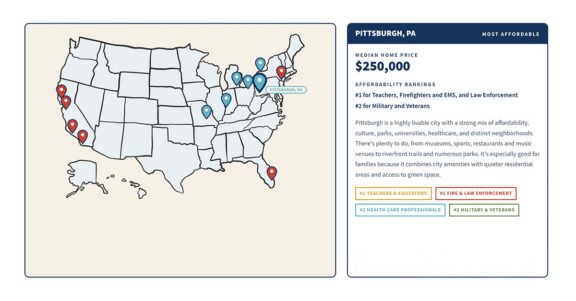
One of the most encouraging findings in the Homes for Heroes report is that homeownership remains attainable for many Hero households in major metro areas.
The strongest opportunities are concentrated in the Midwest and Great Lakes region. Pittsburgh ranks as the most affordable metro for Teachers, Fire and Law Enforcement, and Healthcare Professionals. Buffalo ranks first for Military and Veteran households. Detroit, Cleveland, Indianapolis, and St. Louis also consistently appear among the most affordable housing markets for Hero groups.
These housing markets are not just affordable on paper. Many offer a strong mix of livability, neighborhoods, healthcare systems, universities, parks, culture, sports, restaurants, and community life. For heroes who have flexibility in where they live, these cities may be worth a closer look.
The report also points to several Southern and Sun Belt metros where certain Hero groups may find a more attainable path to homeownership, including Atlanta, Houston, Louisville, Memphis, Richmond, San Antonio, and Oklahoma City, among others.
The full Homes for Heroes housing affordability report includes more detail on how each Hero group compares across the 50 largest metro areas, along with market-level insights that can help heroes understand where their income may stretch further.
Hidden Costs That Affect Hero Buying Power
A home’s listing price is only one part of the affordability picture. The full cost of homeownership can look very different once taxes, insurance, rates, and other monthly expenses are included.
That is why the Homes for Heroes report factors in mortgage rates, local property taxes, homeowners insurance, and a 3% down payment when calculating affordability. Two homes with similar prices can have very different monthly costs depending on location.
Property taxes can vary widely from one city or county to another. Homeowners insurance may be higher in areas affected by storms, wildfires, flooding, or other risks. HOA fees, repairs, utilities, and maintenance can also change what a household can comfortably afford.
Commute costs matter, too. For heroes who work long shifts or need to stay close to a school, hospital, firehouse, police department, base, or support network, a lower-priced home farther away may not feel affordable if it adds hours on the road or higher transportation costs.
The best affordability decisions come from looking at the whole picture: mortgage payment, taxes, insurance, debt, commute, upkeep, savings, and quality of life.
Programs That Help Essential Workers Buy Sooner
You don’t have to figure this out alone. There are programs designed specifically to help heroes and their families get into a home sooner and with less money out of pocket on day one.
Depending on location, profession, income, loan type, and eligibility, essential workers and their families may be able to explore programs that reduce upfront or ongoing costs. These may include down payment assistance, closing cost assistance, grants, VA loans, FHA loans, state and local affordable housing programs, workforce housing programs, employer-based assistance, and homebuyer education resources.
Not every program works the same way. Some are income-based. Some are limited by profession, location, funding availability, or first-time buyer status. Some assistance comes as a grant, while other support may be structured as a repayable loan or second mortgage.
That’s why it helps to compare options early and ask clear questions. What are the eligibility requirements? Does the program need to be repaid? Can it work with your mortgage? Can it be combined with other savings programs?
The more you understand before you start shopping, the more confident you can feel when it is time to make a move.
How Homes for Heroes Maximizes Your Savings
Homes for Heroes is one program that helps eligible heroes save when buying, selling, or refinancing a home by connecting them with real estate and mortgage specialists who understand their needs.
Hero Rewards® savings can help make the path to homeownership more affordable. Heroes save an average of $3,000* when buying or selling a home through Homes for Heroes. Actual savings vary based on home price, services used, location, and transaction details.
Those savings may help with moving expenses, repairs, furnishings, emergency savings, or other costs that come with buying a home. In some cases, Homes for Heroes may also work alongside other homebuyer assistance programs when program rules allow.
The housing affordability report gives heroes a clearer view of where homeownership may be more attainable. Homes for Heroes can help heroes take the next step by connecting them with savings and support throughout the real estate process.
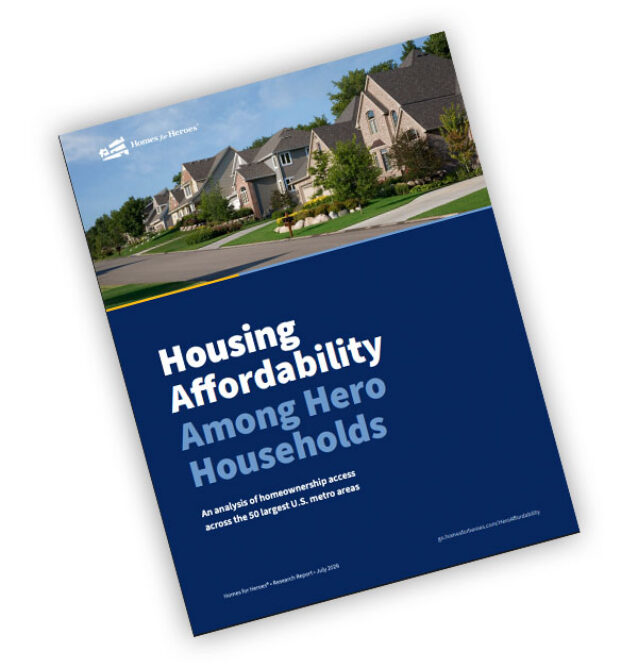
Download the Full Homes for Heroes Affordability Report
Want to see where your Hero group is best positioned to buy?
Download the full Homes for Heroes housing affordability report to compare the nation’s 50 largest metro areas, explore affordability by profession, and see how Homes for Heroes can help you save when buying, selling, or refinancing a home.
Frequently Asked Questions
Where can essential workers still afford to buy a home?
According to the Homes for Heroes housing affordability report, many of the strongest opportunities are in the Midwest and Great Lakes metro areas, including Pittsburgh, Buffalo, Detroit, Cleveland, Indianapolis, and St. Louis. Affordability varies by Hero group, household income, and local housing costs.
What is affordable housing for essential workers?
Affordable housing for essential workers refers to workforce housing and other homes priced within reach of teachers, nurses, healthcare workers, first responders, military members, veterans, and other community heroes. Affordability depends on income, home prices, mortgage rates, taxes, insurance, debt, and other ownership costs.
Why is it harder for essential workers to buy a home today?
Many essential workers face higher home prices, elevated mortgage rates, rising insurance costs, property taxes, and limited housing inventory. The Homes for Heroes report also shows that younger heroes and single-income buyers face more limited affordability in many major metros.
Are there home-buying programs for essential workers?
Yes. Some national, state, local, and employer-based housing programs may help essential workers buy homes through down payment assistance, closing cost help, grants, mortgage savings, or homebuyer education. Homes for Heroes also helps eligible heroes save when buying, selling, or refinancing a home.
How can essential workers make homeownership more affordable?
Essential workers and their families can improve affordability by comparing mortgage options, exploring down payment assistance, improving credit, reducing debt, considering nearby lower-cost housing markets, and using savings programs such as Homes for Heroes when eligible.

Estimate Your Savings
Learn how much you could save on your home purchase. Adjust the slider to see potential savings when you buy with a Homes for Heroes real estate and mortgage specialist. This is an estimate. Your actual savings may vary.