
Still relying on the same lead-gen playbook you used a few years ago? In 2026, that may not be enough.
Buyers and sellers expect more from their agents. They research you before they reach out, compare options quickly, and want someone who feels trustworthy before the first conversation. At the same time, many real estate agents are competing for the same online attention, the same local visibility, and the same limited pool of ready-to-move prospects.
The real estate agents who grow this year won’t be the ones who chase more leads. They’ll be the ones who build better systems, stronger relationships, and clearer reasons for people to choose them.
Here is how to generate more real estate leads in 2026 with smarter online visibility, stronger community ties, better follow-up, and a more meaningful niche, so you attract more buyer leads, seller leads, and qualified leads from serious buyers.
Why Is Real Estate Lead Generation Harder in 2026?
Real estate lead generation has changed. Traditional tactics can still work, but they’re more competitive than ever. More real estate agents are investing in online ads, search visibility, social content, lead platforms, community marketing, and niche positioning, plus social media ads, direct mail, open houses, and cold calling.
That means generic messaging is easier to ignore. Buyers and sellers don’t just want “an agent.” They want a real estate professional who understands their goals, knows the local market, communicates clearly, and gives them a reason to trust them.
A few things are making lead generation more challenging:
- More agents are competing for attention in the same markets
- Buyers and sellers research agents before making contact
- Paid lead sources can be expensive and inconsistent
- Generic, one-size-fits-all tactics get ignored
- Agents without a clear point of difference don’t stand out from the crowd
The opportunity is still there. But agents need a more intentional approach built around visibility, trust, and consistent follow-through.

Optimize Your Online Presence for Leads
Your online presence is often your first impression. Before a prospect calls, texts, or fills out a form, they may already have looked at your website, Google Business Profile, reviews, social media, and recent activity.
Start with the basics.
Claim and complete your Google Business Profile. Add your service areas, business hours, photos, contact information, and a clear description of who you help. An incomplete or outdated profile can make even an experienced agent look inactive.
Collect reviews consistently. Ask satisfied clients to share honest feedback, then respond to reviews in a professional, personal way. Recent reviews help build trust and show prospects that you’re actively serving clients in the market, and turn happy past clients into repeat business and steady referrals.
Use local SEO to your advantage. Create neighborhood pages, market updates, buyer guides, seller resources, and local content that reflects the areas you actually serve. The more specific your content is, the more useful it becomes to people searching in your market.
Make it easy for leads to contact you. Add simple lead capture forms, clear calls to action, phone numbers, and scheduling options across your site. If someone is ready to talk, do not make them hunt for the next step.
Your online presence should work quietly in the background, helping the right people find you before they ever meet you.
Leverage Your Local Community and Niche
Real estate is local, and trust still travels through real relationships.
If you want more real estate leads, show up where your ideal clients already spend time. Sponsor community events, attend school fundraisers, support local nonprofits, join business groups, and build relationships with neighborhood organizations.
Partner with mortgage lenders, title companies, movers, even the coffee shop near a popular neighborhood. Shared audiences mean shared visibility.
You can also host events that provide real value, such as first-time buyer workshops, seller preparation sessions, market update nights, or homeownership Q&As. These events help people see you as a guide, not just someone looking for the next transaction.
Niche positioning can make this even stronger. Trying to serve everyone often makes your message too broad and forgettable. Serving a specific audience makes your marketing easier to write, your outreach more relevant, and your reputation easier to share. In other words, you become more memorable.
Hero communities are a strong example. Military members, veterans, first responders, healthcare professionals, and teachers live in every market. They also tend to be deeply connected through workplaces, departments, schools, bases, unions, and community networks.
When you serve a specific group well, word-of-mouth momentum will follow.
Use Referral Programs and Affiliate Networks
Here’s something most agents already know but don’t always act on. Referral leads close at a higher rate than cold ones. That’s because the trust is already there. Somebody vouched for you, and that changes how a prospect shows up to the first conversation.
That’s why relationship-based lead sources, affiliate networks, and mission-aligned programs can be so valuable. They give agents a clearer way to connect with motivated buyers and sellers who already fit their business focus.
The key is choosing programs that align with the clients you genuinely want to serve. A good fit should strengthen your positioning, support your values, and help you offer something meaningful to your audience.
Homes for Heroes is a great example. The program helps eligible heroes, including military members and veterans, firefighters and EMS professionals, law enforcement personnel, healthcare workers, and teachers and educators, save money when buying or selling a home.

For participating agents, Homes for Heroes offers more than another marketing channel. It creates a way to align your business with a mission, serve a defined audience, and build trusted community connections with the heroes in your market.
When your lead-generation strategy is tied to service and savings, your message becomes stronger than “I can help you buy or sell.” It becomes “I understand who you are, and I’m part of a program designed to give back to those who serve the community.”
Convert More Leads With Better Follow-Up
Generating leads is only half the work. The real difference is what happens after someone raises their hand.
Respond quickly, preferably within an hour, or that prospect just might fall through the cracks. A timely response shows professionalism and respect.
Use a CRM to track every lead and convert leads faster, even cold leads that need more time. Whether you use a full real estate platform or a simple system that works for you, every prospect should have a status, source, timeline, and next action. Leads are often lost because follow-up becomes inconsistent.
Personalize your outreach. A generic “just checking in” message rarely does the job. Instead, reference something specific: the neighborhood they searched, the property they asked about, the timeline they mentioned, or the concern they raised.
Nurture leads who are not ready yet. Many buyers and sellers need weeks or months before they act. Send useful content such as market updates, neighborhood guides, homebuying checklists, seller prep tips, or financing reminders.
Better follow-up is not about being pushy. It is about being organized, responsive, and genuinely helpful.
How Homes for Heroes Helps Agents Generate Real Estate Leads
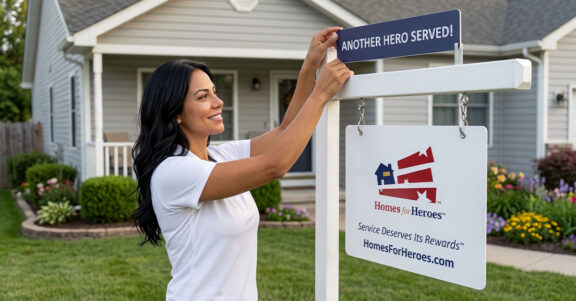
Homes for Heroes helps agents stand out by connecting their business to a clear mission: giving back to the people who serve their communities.
There are five eligible hero groups: military members and veterans, firefighters and EMS professionals, law enforcement, healthcare workers, and teachers and educators. These are people in every local market who may be buying, selling, or refinancing and looking for professionals they can trust.
As a Homes for Heroes affiliate, agents can serve a meaningful niche while offering eligible hero clients access to Hero Rewards® savings. That can create a stronger reason for clients to choose you, remember you, and share their experience with others.
The program also provides marketing support and tools that can help agents communicate the value of Homes for Heroes clearly and professionally. For agents who already have relationships in hero communities, or who want to build them with purpose, the program can support a more focused and differentiated growth strategy.
Homes for Heroes is not about chasing every possible lead. It is about building a business around service, trust, and a client base that values both.
Build a Lead System That Lasts
More real estate leads in 2026 will not come from one tactic alone. The strongest agents will combine online visibility, local presence, niche positioning, relationship-building, and disciplined follow-up.
If you want to grow your business while serving people who give back to your community every day, Homes for Heroes may be a meaningful next step to help you build a more focused and memorable real estate business.
Ready to stand out and serve your community in a more meaningful way? Learn more about becoming a Homes for Heroes affiliate.
Real Estate Leads FAQs
How do real estate agents get more leads in 2026?
Real estate agents can get more leads in 2026 by combining local SEO, referral partnerships, social media, paid ads, and consistent follow-up.
What is the best way to generate real estate leads?
The best way to generate real estate leads is to use multiple channels instead of relying on one source. Strong options include agent websites, Google Business Profile optimization, email marketing, community events, referral programs, and social media.
Are online real estate leads worth it?
Online real estate leads can be worth it when agents respond quickly and have a strong follow-up system. Many online prospects are early in the buying or selling process, so they often need nurturing.
How can new real estate agents get leads with no budget?
New real estate agents can get leads with no budget by leveraging their personal network, posting educational content online, asking for referrals, and attending local community events.
How do you convert more real estate leads into clients?
To convert more real estate leads into clients, respond quickly, personalize your communication, and provide clear next steps. Ask about timing, goals, and concerns, then follow up consistently through calls, texts, and emails.

Estimate Your Savings
Learn how much you could save on your home purchase. Adjust the slider to see potential savings when you buy with a Homes for Heroes real estate and mortgage specialist. This is an estimate. Your actual savings may vary.