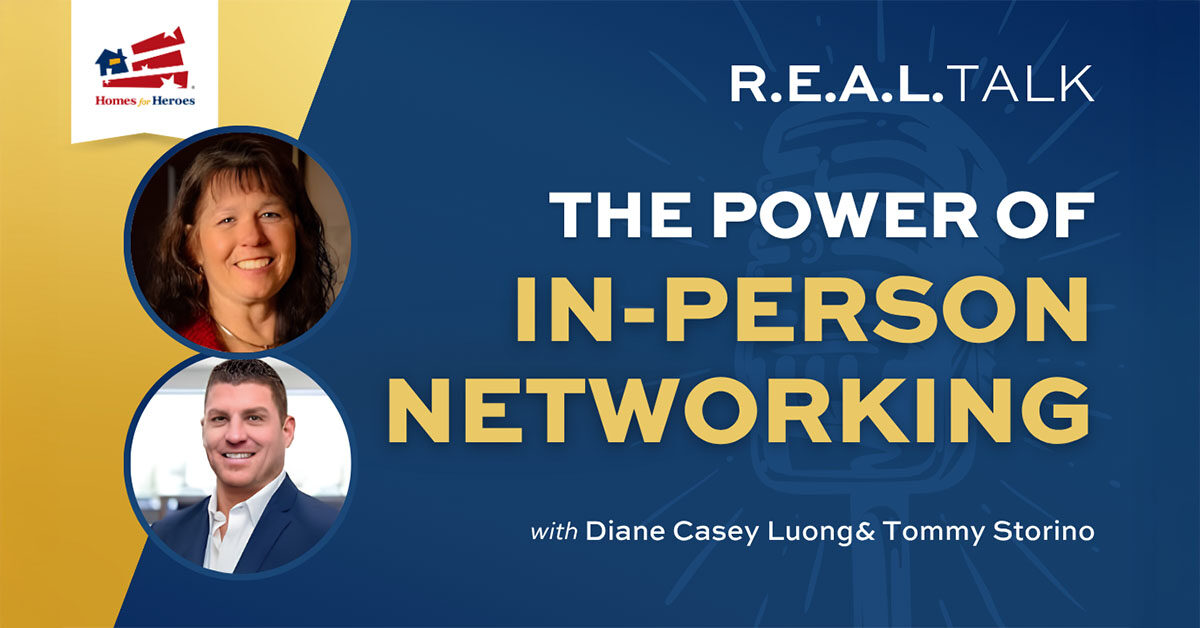
Real estate runs on trust, and trust is built through relationships. On this month’s episode of R.E.A.L. Talk with Homes for Heroes, hosts Leigh Anne Clary and Matthew Ferrara sat down with two Homes for Heroes affiliates who have turned in-person connection into their main source of business: Tommy Storino, senior mortgage advisor with Neighborhood Loans in Chicago, and Diane Casey-Luong, a real estate agent with RE/MAX Vision in Worcester, Massachusetts. Below is Diane and Tommy’s framework for relationship marketing, and how Homes for Heroes is the secret ingredient to its success.
Table of Contents
- Start Building Stronger Community Relationships
- Why In-Person Real Estate Networking Still Matters
- 10 Real Estate Networking Ideas That Generate Referrals
- How to Network on a Small Budget
- How to Overcome the Fear of Networking
- A 30-Day Real Estate Networking Plan
- How Homes for Heroes Affiliates Can Put These Ideas Into Practice
- Frequently Asked Questions
Why In-Person Real Estate Networking Still Matters
Buying or selling a home is one of the biggest financial decisions most people will make, and it carries emotional weight that an email or a polished social feed cannot fully address. In a market where everyone is racing to add more technology and bigger marketing budgets, it is easy to forget that clients are hiring, trusting, and referring a person, not a lockbox or a chatbot. People want to see a face before they trust someone with the biggest purchase of their life.
That does not mean digital tools are the enemy. Technology works best as a supplement to relationships, not a replacement for them. A phone call clears up what a text might confuse. A face-to-face visit builds goodwill that a sponsored post never could. Presence and service are a competitive advantage no platform can replicate, and that idea runs through everything below.
10 Real Estate Networking Ideas That Generate Referrals
Relationship marketing for real estate agents does not require a big budget or a complicated plan. Tommy and Diane’s approach shows what that looks like in practice, and it works just as well as mortgage loan officer networking ideas for lenders building their own referral relationships.
1. Make Simple Pop-By Visits
Tommy’s go-to move is dropping by local police stations and firehouses with something practical: a case of water, a couple of pizzas, or coffee for a crew working a long shift. The visit is not about the item. It is about showing up consistently enough that people know your face before they ever need your services.
2. Lead With Service Instead of Sales
“There’s zero sales pitch when I go in,” Tommy said. Leading with a genuine thank-you instead of a pitch completely changes how people respond, because most of us are used to being sold to everywhere we go.
3. Attend Community and Charity Events
Diane has scaled her networking beyond one-on-one visits by showing up at events that already exist, like local police academy graduations, home shows, and Paws for Blue K9 fundraisers. She is not there to sell. Diane sets up a tent, runs a raffle, and lets the conversations happen naturally.
4. Partner With Complementary Local Businesses
Tommy teams up with a bakery, a restaurant and bar, and a med spa near his neighborhood, all of whom donate food, treats, or services for his community stops. Diane partners with lenders, attorneys, and home inspectors. Every partnership works both directions: each business gets exposure to the other’s network.
5. Create Community-Specific Offers
Tommy’s restaurant partner created a discount card for first responders, military members, and healthcare workers, and his med spa partner offers a free service to first responders and their spouses. Small, genuine gestures like these build goodwill well beyond the person who redeems them.
6. Carry Thank-You Cards and Small Gifts
Diane keeps five and ten dollar coffee cards in her purse, car, and backpack so she is always ready for an unplanned moment, like recognizing someone in scrubs at the grocery store. Tommy carries postcards, flyers, and branded keychains. None of it needs to be expensive to be memorable.
7. Turn Everyday Encounters Into Conversations
Some of the best moments happen off the calendar entirely. Tommy has covered a stranger’s ice and Gatorade at a gas station on a 90 degree day. Diane is known for stretching a grocery run to three hours because she stops to thank anyone she sees in scrubs. Listening first, before mentioning what you do, is what makes people remember the conversation.
8. Use Natural Conversation Starters
Diane wears workout shirts with her Homes for Heroes web address on the back and gets stopped at the gym because of it. Tommy hands out bottle-opener keychains that police officers clip to their vests. Branded, low-key items give people a reason to ask about you instead of the other way around.
9. Follow Digital Communication With a Personal Touch
Tommy uses text and email for client communication, but he always follows up with a phone call to make sure nothing was missed or misread. A digital message can easily be misinterpreted without additional context. A quick call cleared it up in seconds.
10. Stay Connected After the Transaction
Tommy gives every closing hero a custom gift, like a blue line flag whiskey glass with the Homes for Heroes logo, so they keep thinking of him long after the paperwork is signed. Past clients now invite him to their barbecues. As Tommy put it, you cannot invite a computer to a barbecue.
How to Network on a Small Budget
You do not need a big budget to start. Diane advises real estate agents to partner with a lender, attorney, or inspector to split costs, and stock up on affordable snacks and supplies from the dollar store, adding your own labels to keep things personal. She also keeps a cooler of water in her car during Massachusetts heat waves to hand out to road crews working outside. None of this requires a large investment. Starting with one or two pop-bys a month is enough to build momentum, and the thought behind the gesture will always matter more than what it cost.
How to Overcome the Fear of Networking
Many agents and mortgage professionals avoid in-person networking not because they lack skills, but because approaching strangers feels uncomfortable. That discomfort is normal and does not have to be a barrier.
Starting with a simple thank-you removes most of the pressure. You are not asking for anything. You are expressing appreciation, which almost everyone receives well. Attending events with a colleague or business partner makes the experience less intimidating and gives you a natural way to introduce each other.
Asking people about their work before discussing your own shifts the focus away from you, which tends to ease anxiety considerably. Practicing in low-pressure settings, such as a local coffee shop or a community volunteer shift, builds confidence gradually. Not every interaction will go well, and a brief or neutral response is not a rejection. Focusing on helping rather than selling changes the entire dynamic of how you show up and how people respond.
A 30-Day Real Estate Networking Plan
Week 1: Identify Opportunities
Research first. Find a local charity event, home show, or community gathering you can attend, and identify one or two local businesses you would like to partner with.
Week 2: Start Conversations
Attend one event and introduce yourself to a few people. Ask about their work or their organization before mentioning your own. Home shows are a great opportunity to meet other businesses who can become your referral partners.
Week 3: Complete Your First Pop-Bys
Team up with a local business and bring something simple like coffee or snacks to a firehouse, police station, or school. Leave contact information without any pressure to respond.
Week 4: Follow Up
Thank new contacts by phone, not just text or email. Tommy’s rule of thumb applies here too: the more you show up and talk to people, the more natural it becomes.
How Homes for Heroes Affiliates Can Put These Ideas Into Practice
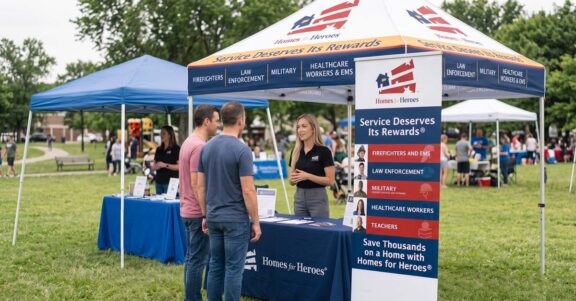
Homes for Heroes affiliates are uniquely positioned to apply the framework because the affiliate real estate and mortgage partners in this network already have a natural reason to connect with firefighters, law enforcement, military members, healthcare professionals, and teachers in their communities. Pop-bys at local firehouses and schools, partnerships with other Homes for Heroes affiliates to share costs, and community-specific offers all work exactly as Tommy and Diane described, with one added advantage: an existing relationship with the hero community you are serving.
When you introduce Hero Rewards® to a new contact, lead with service, not sales. Mentioning that the program exists to give back to community heroes positions the value correctly from the start. Using approved Homes for Heroes marketing materials keeps your messaging consistent, and showing up the way Tommy and Diane do, consistently and without a pitch, is what builds the kind of local recognition that generates referrals without a hard ask.
To learn more about the affiliate program, Hero Rewards, and available professional resources, visit the Homes for Heroes affiliate page.
Frequently Asked Questions
How do real estate agents build a professional network?
Building a professional network starts with consistent community involvement and genuine relationship building rather than immediate sales outreach. Attending local events, volunteering with community organizations, partnering with complementary businesses, and following up with past clients are all effective approaches. Professional associations and home industry events provide additional opportunities to connect with other agents, lenders, and service providers. The most durable networks grow through repeated, low pressure interactions where the agent leads with service and allows trust to develop naturally over time.
Where can real estate agents network?
Real estate agents can network in a wide range of settings beyond traditional industry events. Local businesses, schools, charity fundraisers, home shows, professional associations, community markets, and first responder organizations are all productive venues. Everyday environments like coffee shops, gyms, and neighborhood gatherings also present organic opportunities to meet potential clients and referral partners. The most effective networking happens wherever the agent is genuinely present and engaged rather than simply visible.
What are good real estate pop-by ideas?
Effective pop-by items are practical, thoughtful, and appropriate for the recipient. Coffee, snacks, water, school supplies, thank you cards, and branded items like keychains or notepads all work well. The specific item matters less than the intention behind the visit. Bringing something useful to a firehouse, school, or local business communicates appreciation and creates a memorable first impression without requiring a large investment.
Can networking help real estate agents generate referrals?
Consistent networking is one of the most reliable ways to generate real estate referrals over time. When agents and mortgage professionals show up regularly in their communities, lead with genuine service, and stay connected with past clients, they remain top of mind when someone in that person’s network needs real estate help. Referrals tend to come from people who trust you personally, not just people who have seen your advertising. Relationship driven outreach builds that trust in a way that digital marketing alone cannot replicate.
Start Building Stronger Community Relationships
The most effective real estate networking strategy is one you will actually use consistently. If you are wondering how to get real estate referrals without relying entirely on paid advertising, start with one or two of the ideas above, build a simple routine around them, and let the relationships develop from there. Agents and mortgage professionals who lead with service and show up with genuine intention are the ones clients remember, recommend, and return to. If you are ready to put these ideas into practice within a community that already values your work, learn more about becoming a Homes for Heroes affiliate.

Estimate Your Savings
Learn how much you could save on your home purchase. Adjust the slider to see potential savings when you buy with a Homes for Heroes real estate and mortgage specialist. This is an estimate. Your actual savings may vary.